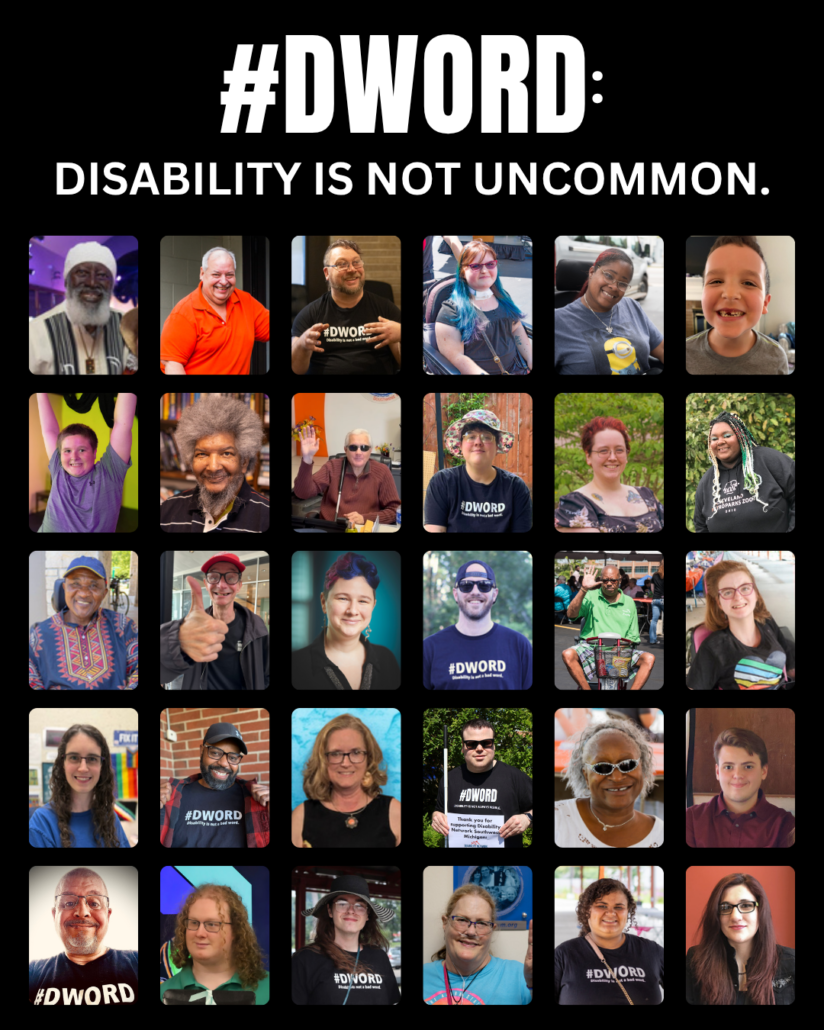
This toolkit was created by Disability Network Southwest Michigan (DNSWM) to make it easy to participate in Disability Pride Month. Included are graphics and resources that can be shared throughout July and beyond to raise awareness, spark conversations, and show support for the Disability Community.
What is #DWord?
#DWord refers to the word disability. In 2024, DNSWM introduced the #DWord campaign during Disability Pride Month, aiming to raise awareness, dismantle the stigma around disability, and build louder and prouder conversational spaces online and in the community. 2024’s slogan was a simple one: #DWord: Disability is not a bad word. In 2025, the campaign continued with #DWord: Disability is not always visible. The third iteration, #DWord: Disability is not uncommon, was introduced July 1, 2026.
Why It Matters
Disability is much more common than often realized. Whether it’s us, a family member, a friend, or a coworker, disability impacts all of us.
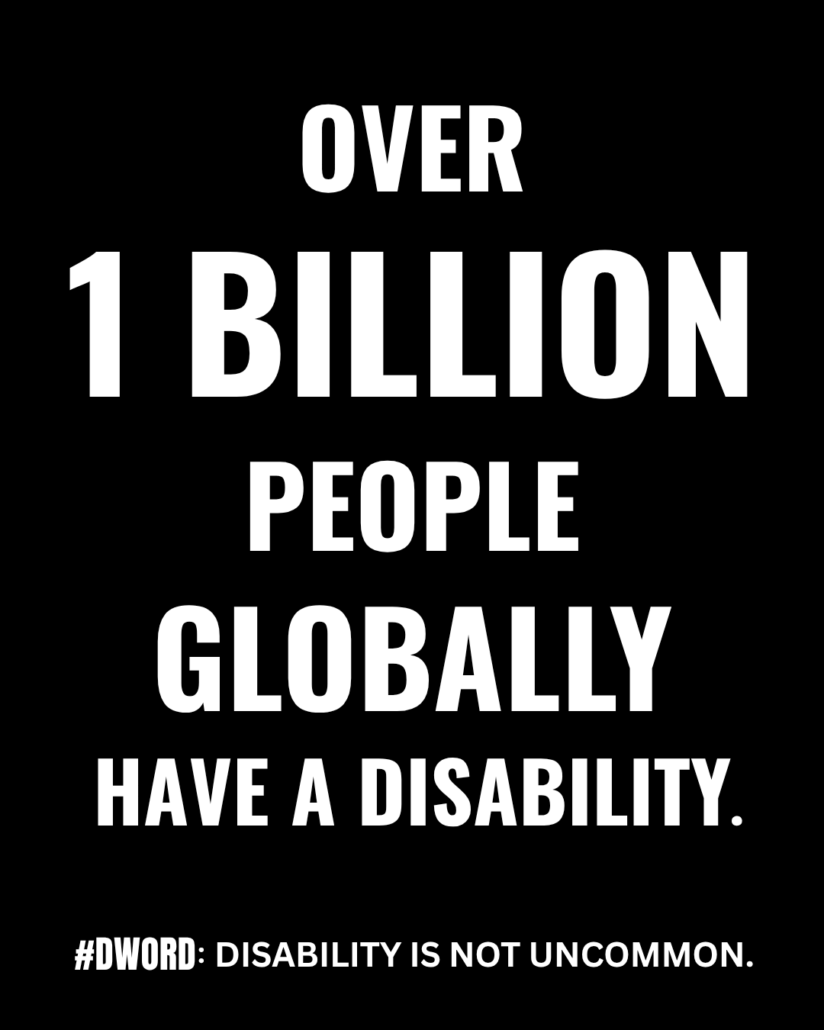
More than 1 in 4 adults in the US has a disability.
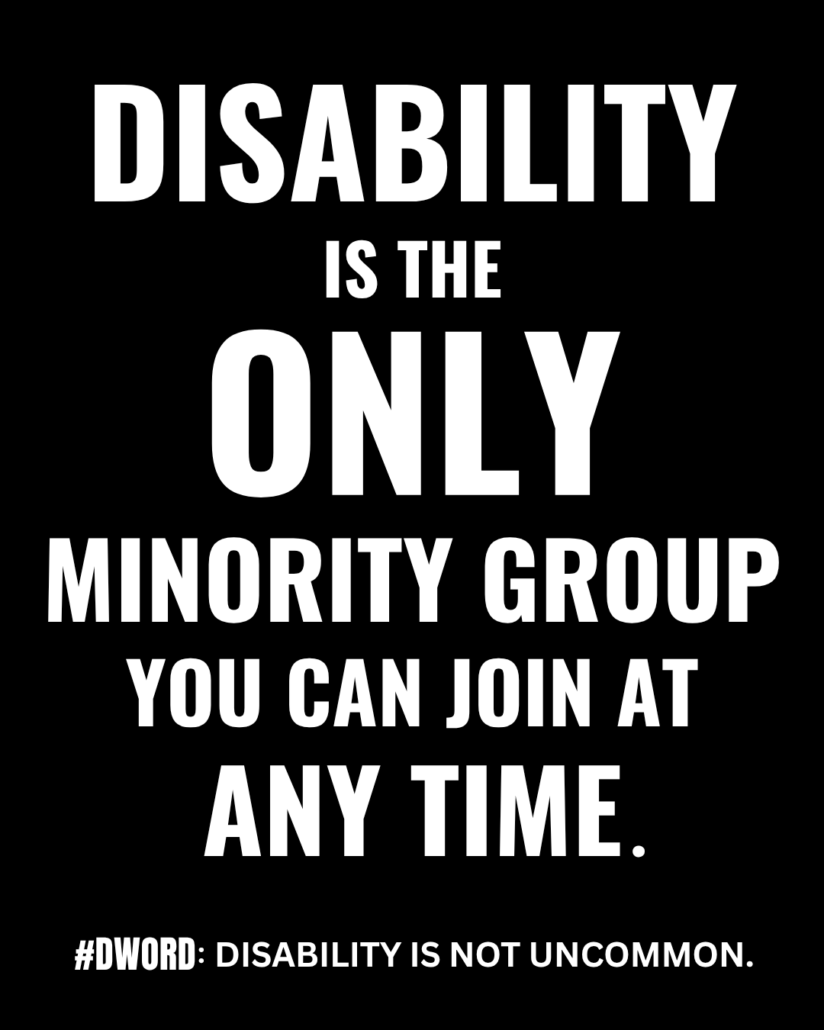
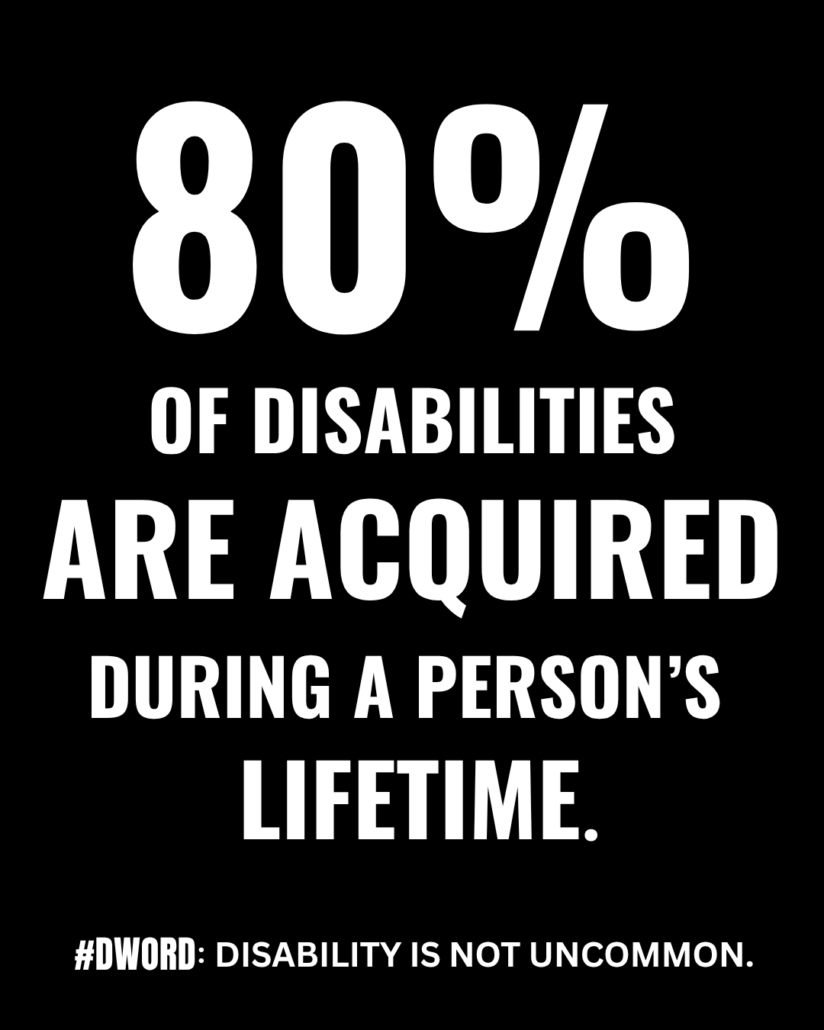
80% of disabilities are acquired throughout a person’s lifetime.
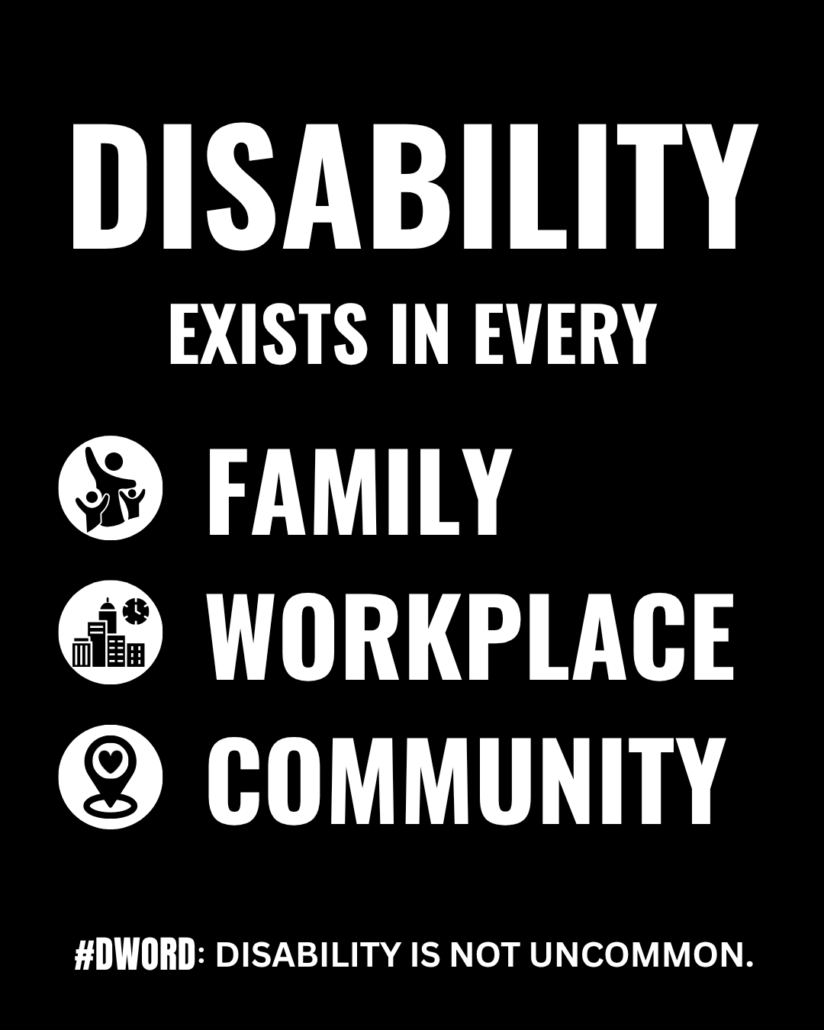
Disability is part of every family, every workplace, and every community.
Disability is a natural part of being human and is not a bad thing.
This content is intended for use by all. Site visitors are encouraged to share this webpage.
Site visitors are also encouraged to download an accessible PDF version of this toolkit for individual reference or for sharing. The PDF contains ready-made social media posts and hashtags that can be copied & pasted.
Disability Etiquette Note: It’s completely okay to be learning! Respectful questions and conversations, especially around topics like disability language, are what help build understanding and a stronger community. You are invited to ask questions or request feedback around disability language, verbiage, alt. text, image descriptions, accessibility, or anything that is helpful. We are here to help, without judgment or critique. Contact information is listed below.
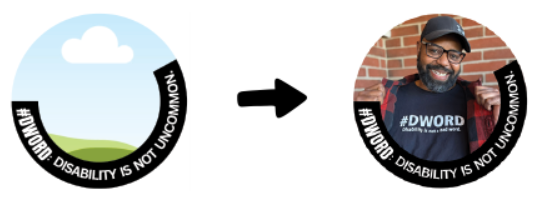
Follow the link and click View Template, then click Open in Editor.
Click Upload on the left hand side, then upload your desired image to Canva.
Once your image is uploaded to the account, add your photo to the design by clicking and dragging your photo and hovering over the circle area that currently shows a blue sky, cloud, and green fields. Reposition or resize your image as desired.
Click the Share button in the top right-hand corner of the menu, then select Download and click the purple Download button.
Upload as your profile picture to the platform of your choosing.
Bring #DWord Into Your Meetings
Click individual images for a larger image preview or to download.
Disability isn’t rare. It’s part of every family, every workplace, and every community. #DWord #DisabilityPride #DisabilityPrideMonth
ID: Disability Network Southwest Michigan logo. Text: #DWord: Disability is not uncommon.
Sample Post 2
#DWord stands for the word disability. This #DisabilityPrideMonth, [organization name] stands with Disability Network Southwest Michigan and all disability organizations in celebrating disability as a part of every community! #DWord #DisabilityPride #DisabilityPrideMonth
ID: Disability Network Southwest Michigan logo. Text: #DWord: Disability is not uncommon.
Sample Post 3
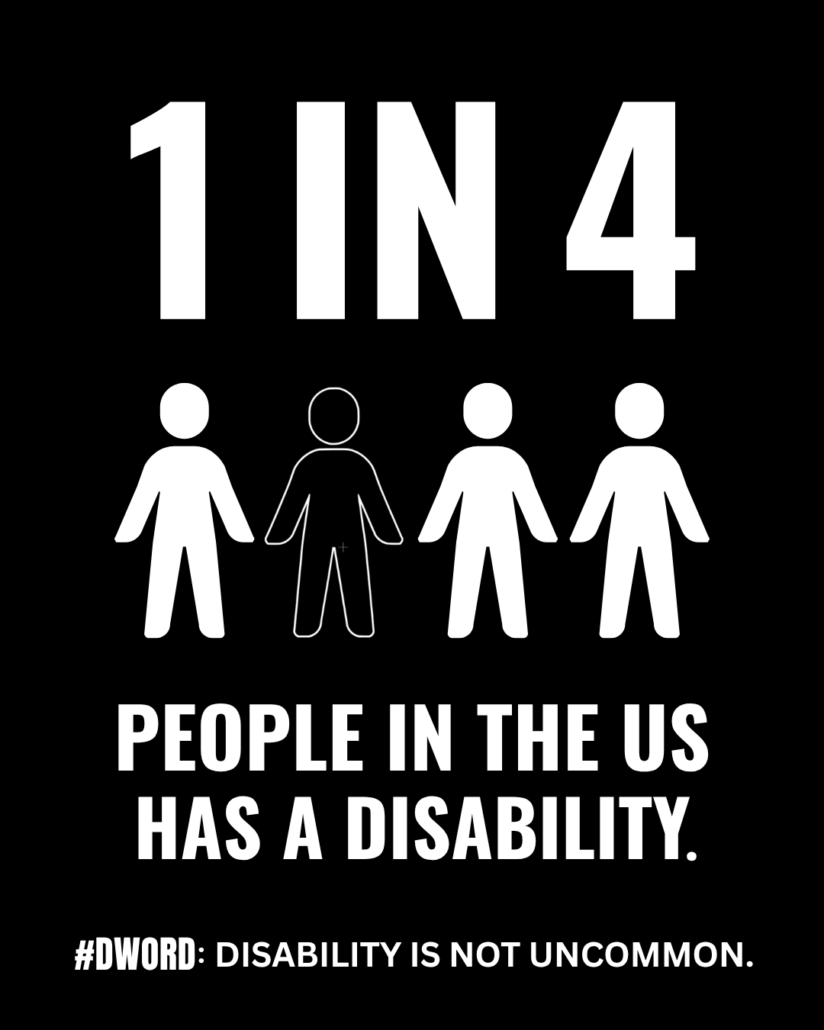
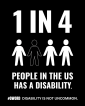
One in four adults in the United States has a disability. Disability is not uncommon! #DWord #DisabilityPride #DisabilityPrideMonth
ID: A graphic representing one in four people. Text: 1 in 4 people in the US has a disability. #DWord: Disability is not uncommon.
Sample Post 4
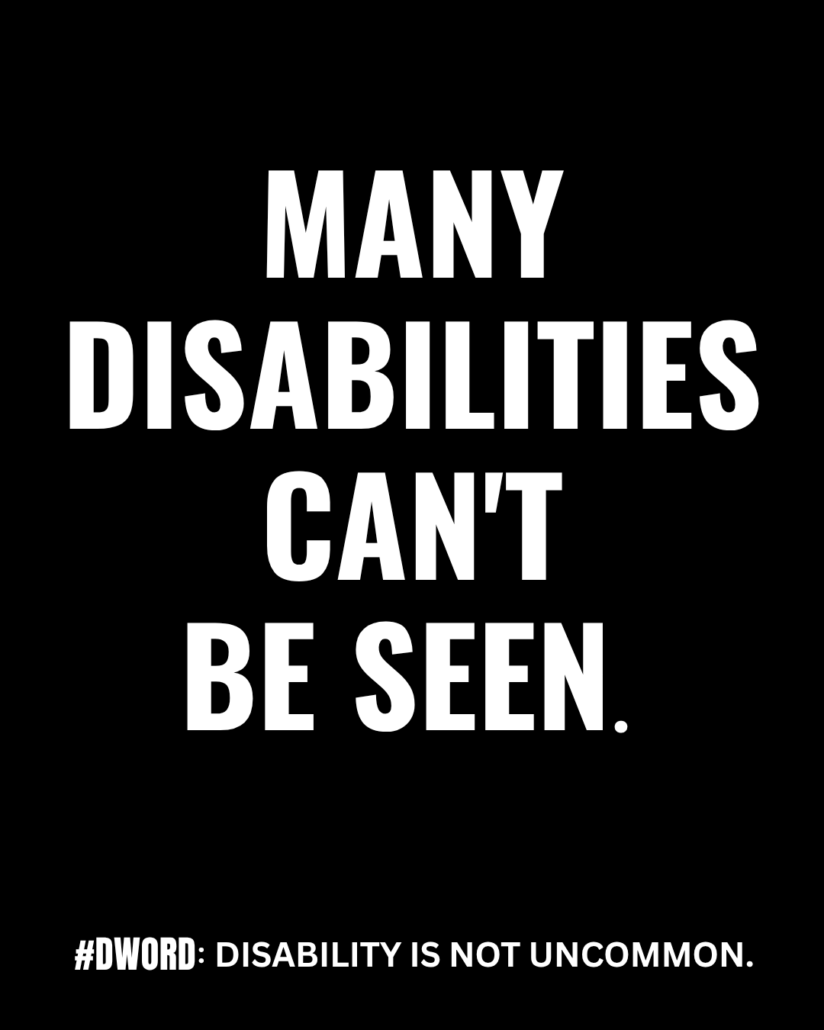
When people think of disability, they often picture a wheelchair. In reality, many common disabilities, including hearing loss, ADHD, learning disabilities, chronic pain, mental health disabilities, and more may not be immediately visible. Disability is broader and more common than we often think!
This #Disability Pride Month, we celebrate all disabilities — whatever they may look like (or not look like)! #DWord #DisabilityPride #DisabilityPrideMonth
ID: A graphic demonstrating one in four people. Text: 1 in 4 people in the US have a disability. #DWord: Disability is not uncommon.
Sample Post 5
Disability is not uncommon. This #DisabilityPride Month, we’re proud to stand alongside people with disabilities and support a more accessible and inclusive community for all. #DWord #DisabilityPride
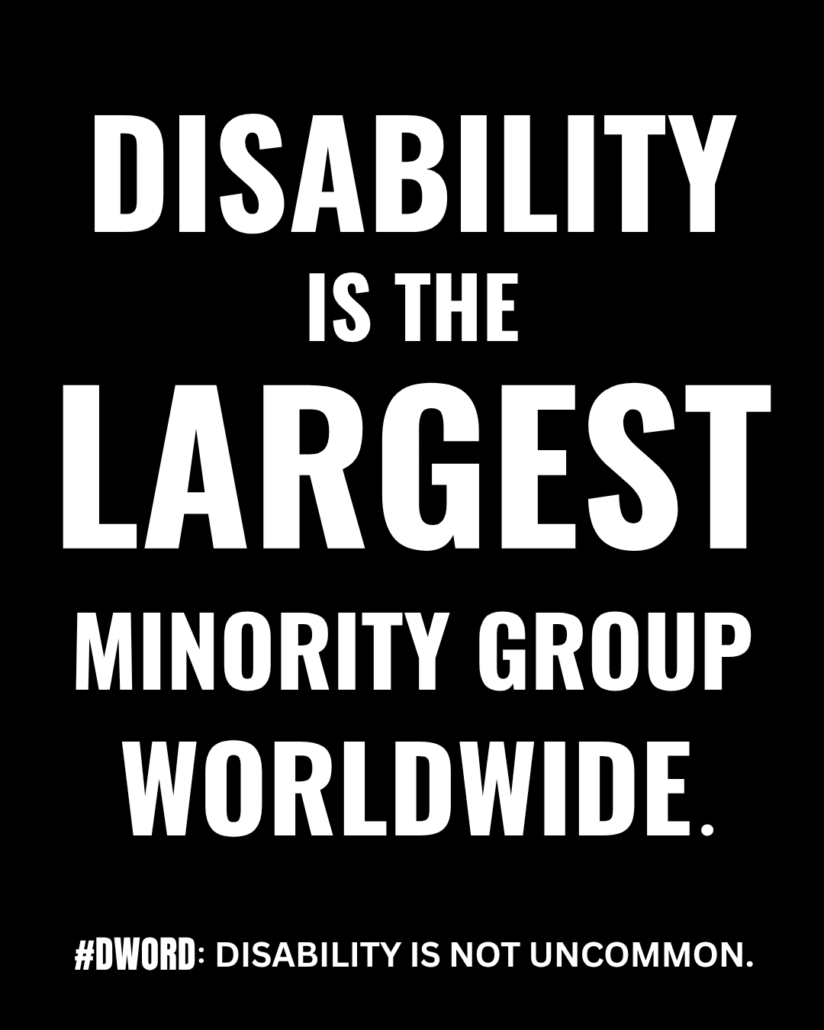
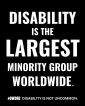
ID: Text: Disability is the largest minority group worldwide. #DWord: Disability is not uncommon.
Sample Post 6
Did you know that disability is the world’s largest minority group? Disability is a natural part of the human experience. #DWord #DisabilityPride #DisabilityPrideMonth
ID: Text: Disability is the largest minority group worldwide. #DWord: Disability is not uncommon.
Not everyone experiences social or digital media the same way. For example, people who are blind or have low-vision, as well as people with learning, reading, processing, and other disabilities, often rely on assistive technology such as screen readers or other software programs to read digital content aloud for them. A few basic steps when setting up content can ensure that all important information intended for the consumer is received.
Three Basic Accessibility Strategies
1
Hashtags
Hashtags are easier to discern and understand when using “camel case” instead of all caps or no caps. #DisabilityPrideMonth is more effective than #disabilitypridemonth.
2
Alternative Text (Alt Text)
Alternative text (alt text) is a short, written description attached to an image that explains the important details to someone with a vision disability. Most all social media platforms and scheduling programs have a mechanism for setting the alt text. The alt text becomes embedded into the HTML of the graphic or image and is generally only accessed by people using screen readers or assistive technology.
Image descriptions (IDs) are similar to alt text, but “exposed” and can be read or accessed by anyone. This is particularly helpful for a person who doesn’t have a vision disability but may need help processing the context or other elements of an image. An image description is included in the body of the post, usually at the end.